
How a wedding evening
unfolds, hour by hour
From the ceremony to the last track: a realistic timeline, built on a hundred weddings played in Bordeaux and the Gironde.
Timing does more for the atmosphere than the playlist
You can have the best music in the world: if the meal lasts four hours, nobody dances any more.
Most couples prepare their music carefully and leave the running order to chance. That is a shame, because the energy of an evening depends first on its rhythm. A cocktail hour that drags on, slow service, a first dance at one in the morning: these are the three most frequent causes of a dance floor that never takes off.
Here is a typical running order, the one that comes up most often at the weddings I play. Nothing about it is compulsory — it is a starting point to adapt to your venue, your caterer and your wishes.
A wedding evening, hour by hour
Basis used: non-religious ceremony in the late afternoon, reception until 4 am. It is the most common format in the Gironde.
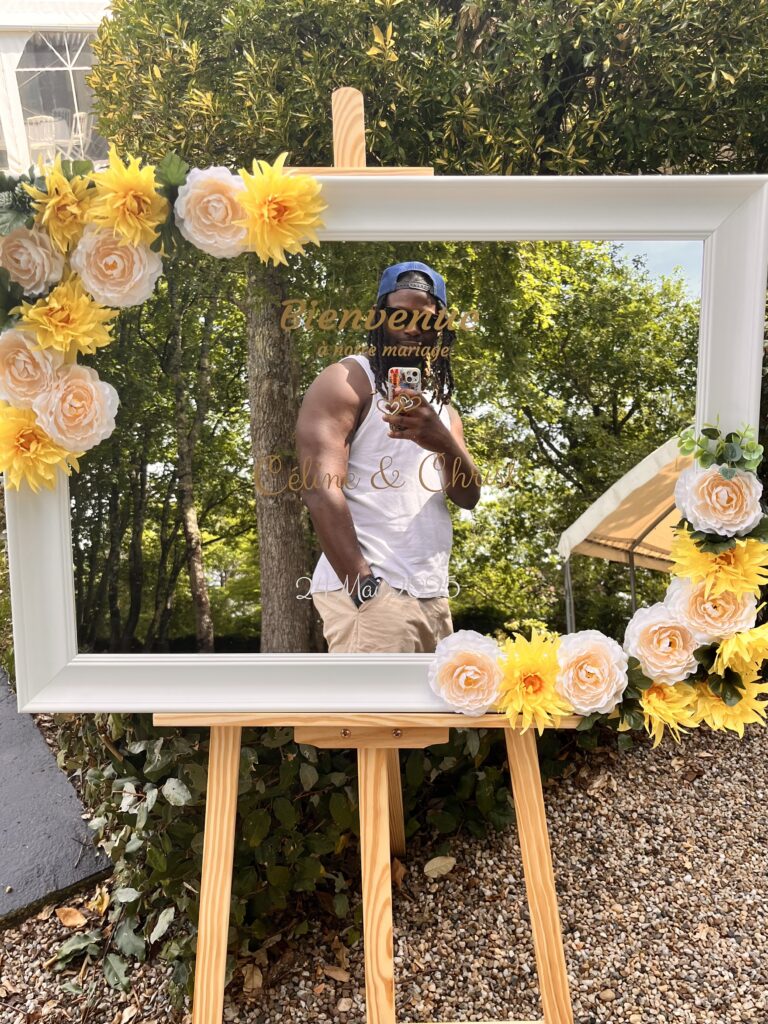
- 4:00 pmNon-religious ceremonyAllow 30 to 45 minutes. Beyond an hour, attention drops, especially in full sun. I set up the speakers and do the sound check well before the guests arrive. Then allow a good while for the congratulations and the first photos: that explains the gap before the cocktail hour. See how I provide sound for a ceremony.
- 6:00 pmCocktail hourTwo hours to two and a half hours is the right format. Any shorter and the guests do not have time to catch up; any longer and the energy drops and dinner starts too late. With festive groups, I often get people dancing from the cocktail onwards.
- 8:30 pmReception entranceThe most underestimated moment. I get everyone on their feet and create a guard of honour: you walk in to music, to applause. It sets the tone for the whole evening.
- 9:00 pmDinner — starter and main courseSoft background music: lounge, or well-known tracks in violin-and-piano versions. Present enough to avoid silence between the tables, discreet enough to talk without straining your voice.
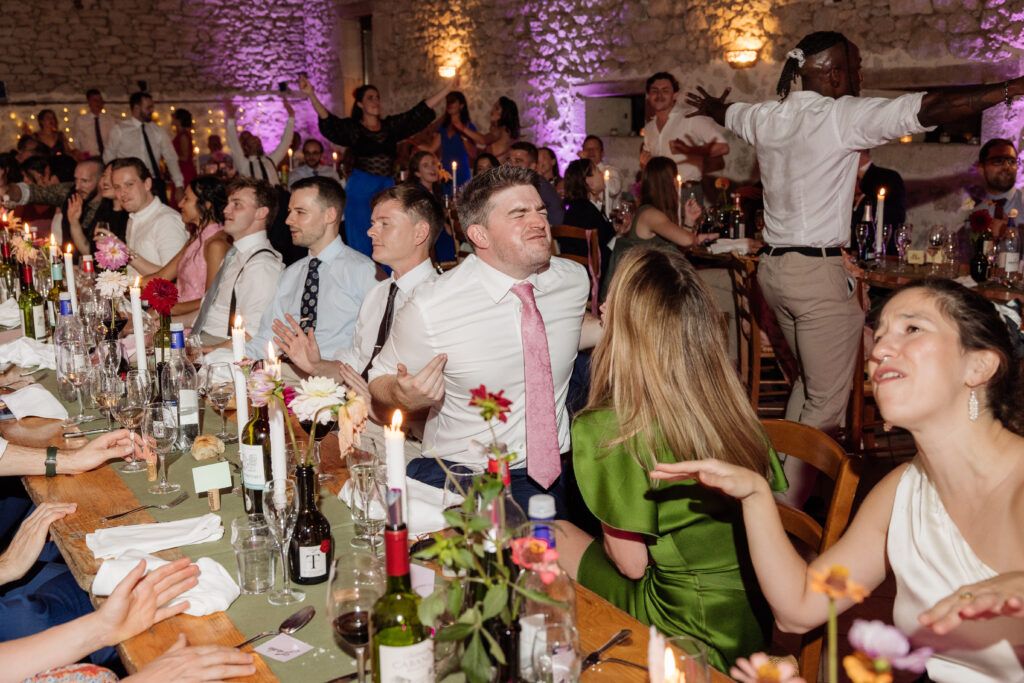
- 10:00 pmActivity between two coursesThis is the lull of the evening: the guests have been seated for a long time. A music quiz between the tables gets everyone going again, and the grandmothers often recognise the tracks before the teenagers. Discover the activities.
- 10:30 pmSpeeches and cakeGroup the speeches together rather than scattering them. The cake then arrives, to music, with cold sparklers if you want them — it is the most photographed moment of the evening after the first dance.
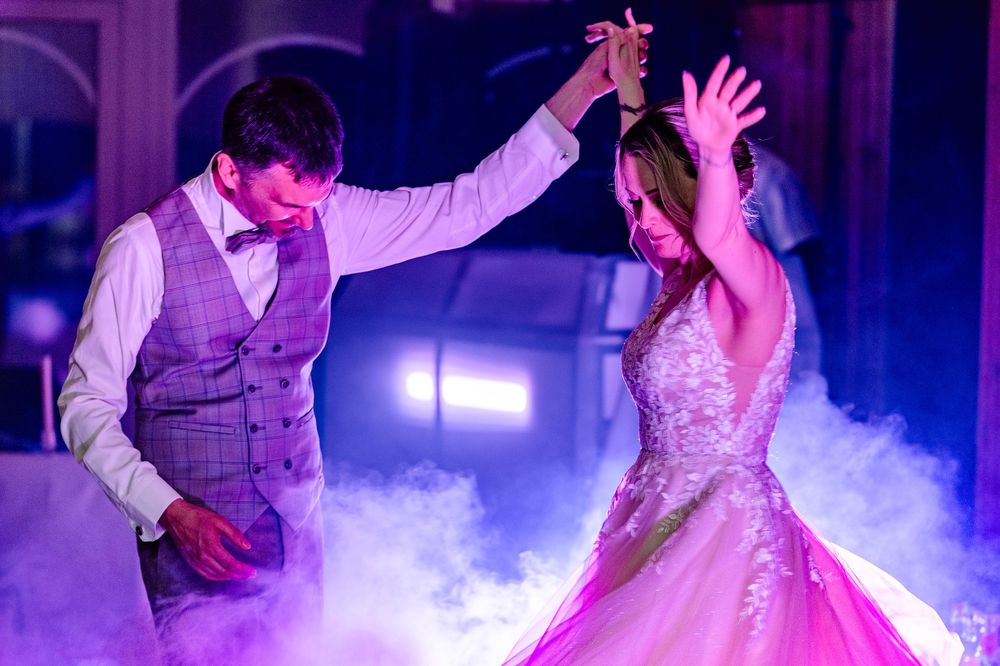
- 11:00 pmFirst danceDo not schedule it any later. After midnight, some of the guests have already left or are tired. With low-lying fog, the dance floor becomes a stage set and your photographers will thank you.
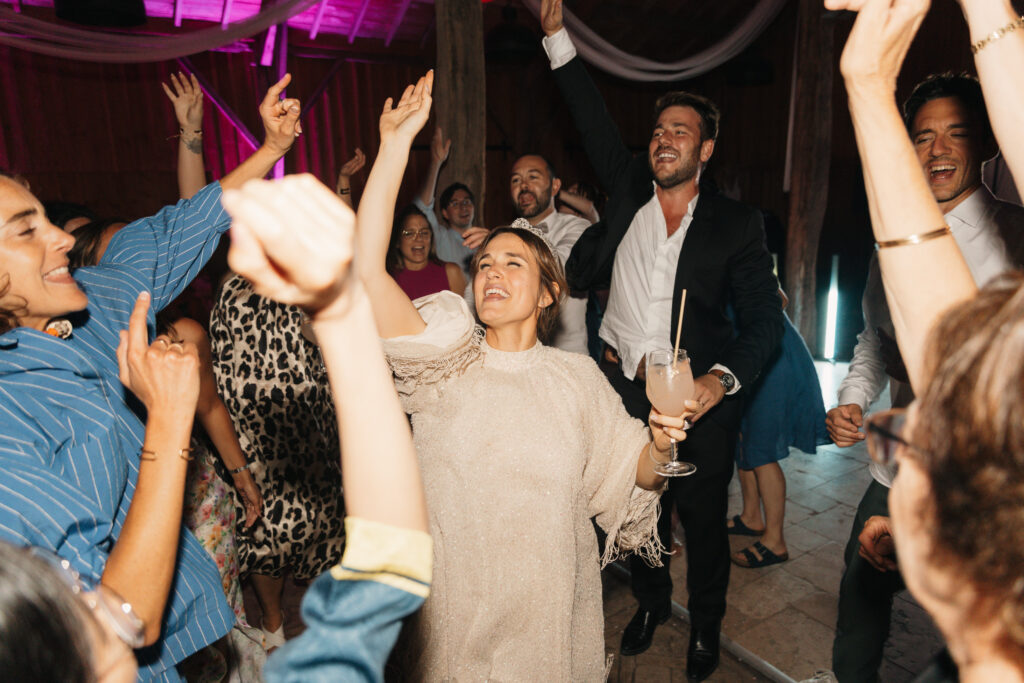
- 11:15 pmThe dance floorI follow on immediately after your dance, with no break, starting with the tracks that bring every generation together. The first twenty minutes decide the rest of the night.
- 1:00 amThe second windThere is always a lull around one o’clock. That is when we relaunch: a change of style, a surprise track, or a sequence designed with you beforehand. Some nights it turns into karaoke with my two microphones — I do not schedule it, but when the group asks for it, I am ready.
- 4:00 amThe last trackChoose it in advance. A last track that gathers everyone in a circle is better than a gradual fade-out where everyone drifts off separately.
The five most common timing mistakes
None is serious on its own. Put together, they push an evening back by an hour and a half.
- A meal that is too long. Three hours between the starter and dessert, and the dance floor will not take off. Talk frankly to your caterer: ask for the real service time, not an optimistic estimate. Two and a half hours is a good ceiling.
- A first dance after midnight. This is the costliest mistake. The oldest guests leave around midnight, the children before. Opening at 11 pm keeps everyone with you.
- Scattered speeches. Four speeches spread across the evening break the rhythm four times. Group them into a single moment, ideally before dessert.
- A three-hour cocktail hour. Appealing on paper, exhausting in reality. The guests are hungry, the energy drops, and everything else shifts accordingly.
- Forgetting the permitted end time. Some venues cut off at 2 am, others at 5 am. This information shapes the whole running order — check it before building your schedule, not afterwards.
Build in some slack
A wedding always runs late, it is normal. Add fifteen minutes of leeway after the cocktail hour and after the meal: you will absorb the unexpected without pushing back the first dance.
What changes depending on your wedding
If your ceremony is in the morning
A civil or religious ceremony in the late morning, lunch, then an often empty afternoon before the evening. It is the hardest format to sustain: plan real entertainment in the afternoon, or accept a break during which the guests go back to change.
If you are fewer than fifty
Everything goes faster. Service is a good half-hour shorter, and so are the speeches. You can open the dance floor around 10:15 pm and enjoy a longer night.
If your venue has a sound limiter
It cuts the power above a threshold, often 95 decibels. That does not doom the evening, but it changes how the sound is set up: several speakers spread out rather than one big volume in a single spot. To be flagged at the quote stage.
If the wedding continues the next day
No need to push on until 5 am. An evening that ends at 3 am in good spirits beats a dragging finish — and the next day’s brunch will be far more successful.
What I am asked most often
What time should the first dance be?
Between 10:30 and 11 pm in the vast majority of cases. Earlier, some guests are still at the table; later, the first departures have begun and you lose the group effect.
How long does a cocktail hour last?
Between two hours and two and a half hours. An hour and a half is enough if you have few guests; beyond three hours, the energy drops and dinner starts too late.
Do we need music during the meal?
Yes, but discreet. Silence between the tables creates awkwardness, and guests raise their voices to fill it. Soft background music relaxes the atmosphere without anyone having to speak louder.
What time should the music stop?
That depends solely on your venue. In the Gironde, most estates allow until 3 or 4 am, some until 5 am, a few stop at 2 am. It is the first question to ask when booking.
When should we schedule the group photos?
During the cocktail hour, while it is still light and everyone is present. After the meal, you will have lost half of them.
We build your running order together
Every wedding has its rhythm. Tell me your venue, your ceremony time and your number of guests: I will suggest a suitable running order, and a clear quote within 24 hours.