
Sound for your
non-religious ceremony
Your vows heard by everyone, your music launched to the second, and discreet background music during the speeches. It is included in my wedding package.
A ceremony lives or dies by its sound
It is the most moving moment of the day — and the most fragile technically.
A non-religious ceremony means people speaking softly, often moved, sometimes outdoors in the wind. Your guests are seated in several rows, the furthest fifteen metres away. Without sound, half the audience hears nothing and switches off.
My job that day is to make sure nobody misses a word. And that the music you have chosen arrives at exactly the right moment, with no gap, no botched fade, and nobody running towards a Bluetooth speaker.
It is included in my wedding package
No option, no extra charge. If I DJ your evening, I provide the sound for your ceremony. I consider it part of the same job: accompanying you from the first word to the last track.
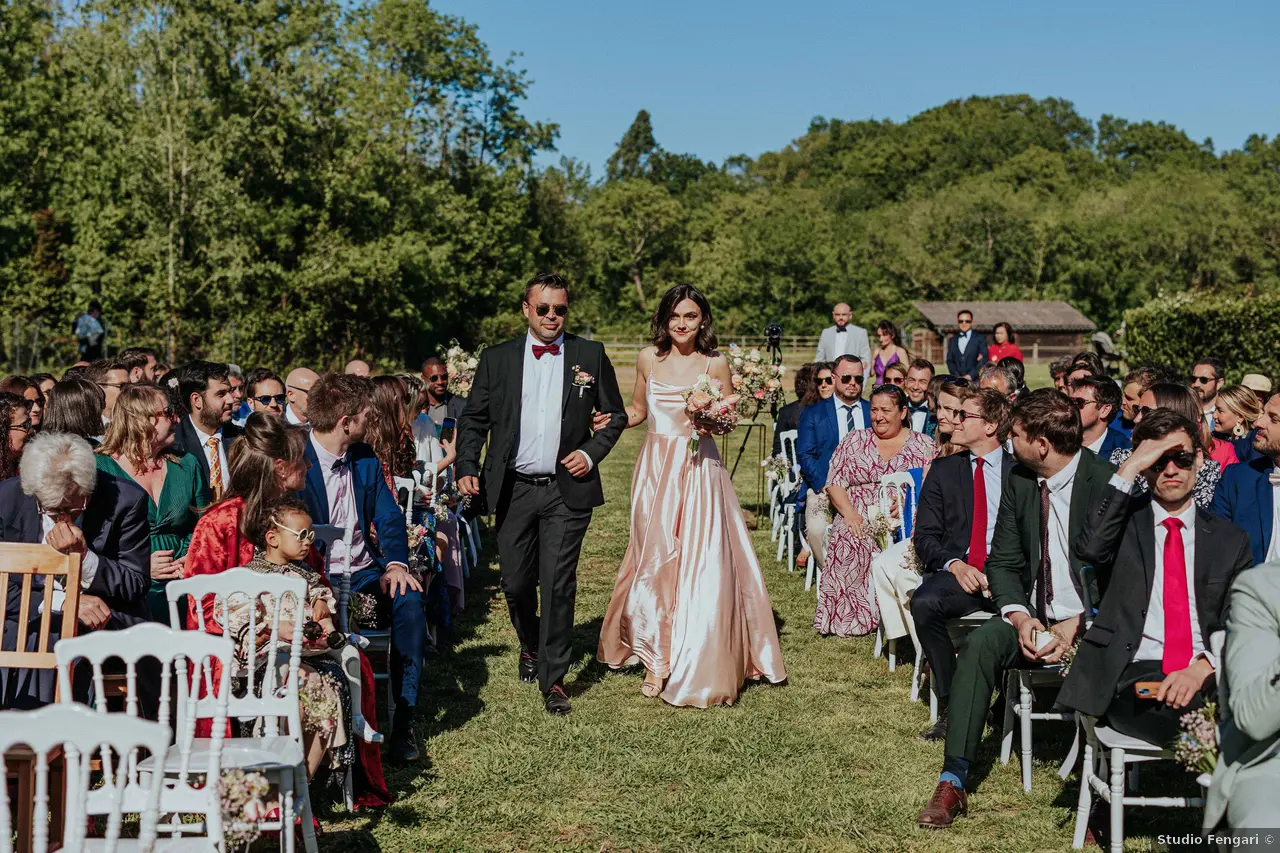
Column speakers, discreet and effective
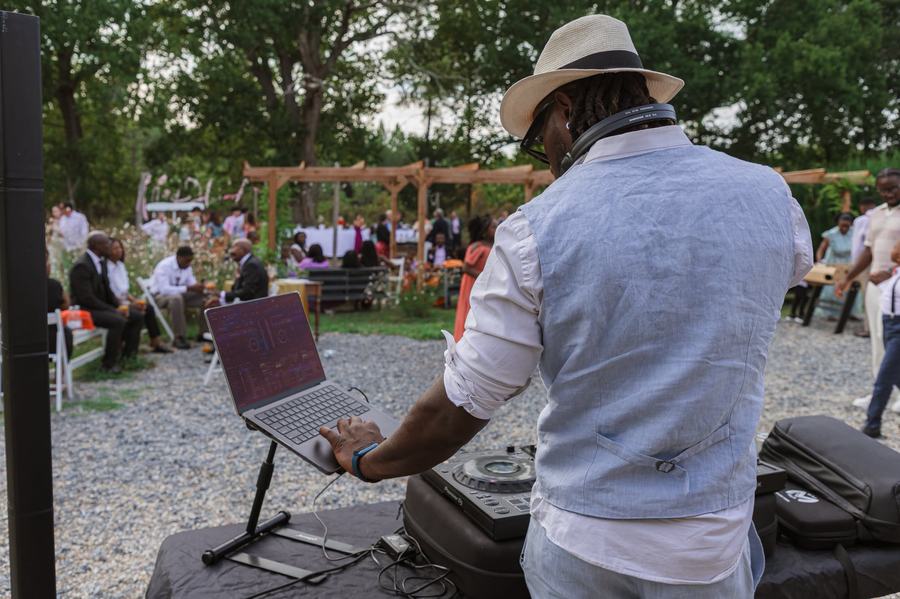
Powerful enough to cover the gathering, elegant enough to disappear in your photos.
I set up one or more column speakers depending on the layout: one is enough for around thirty guests gathered closely around the arch; two or three become necessary as soon as people spread out or numbers go beyond eighty.
Mounting on a column is not an aesthetic detail. It places the sound at ear height above people’s heads, so it carries to the last row without having to push the volume at the front. Guests in the first row do not get the sound system full in the face, and those at the back hear just as well.
The microphones
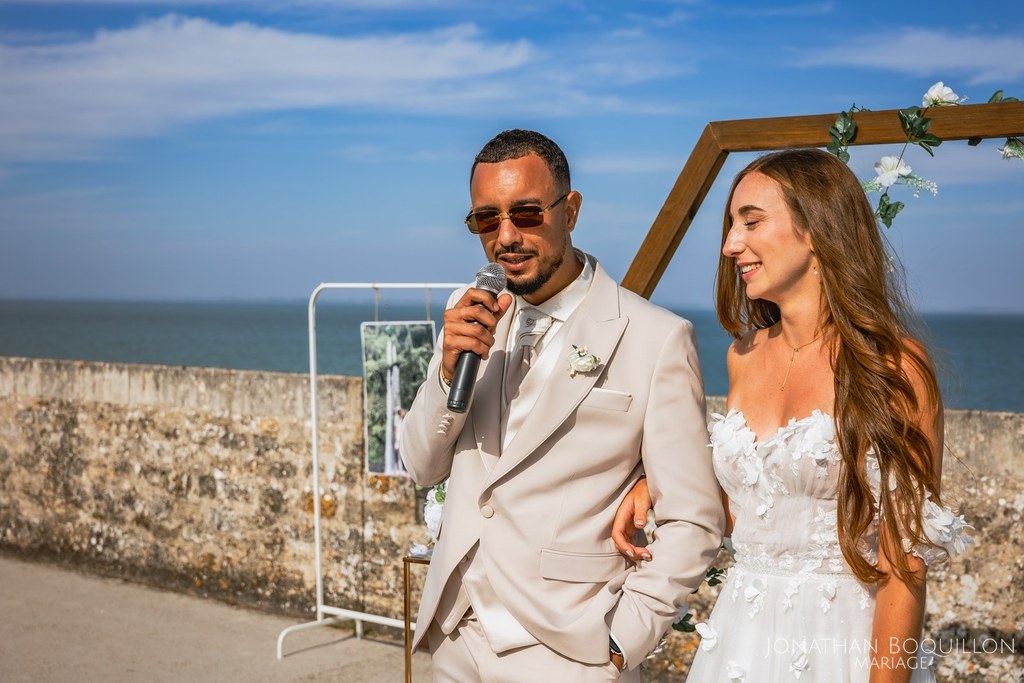
One microphone for the celebrant, one or two for those who speak. They pass from hand to hand between the speakers — I manage the levels live, because a whispering witness and a declaiming brother do not need the same setting.
If you read your vows facing each other, I plan a way to capture both voices without you having to hold anything.
Outdoors, plan a fallback
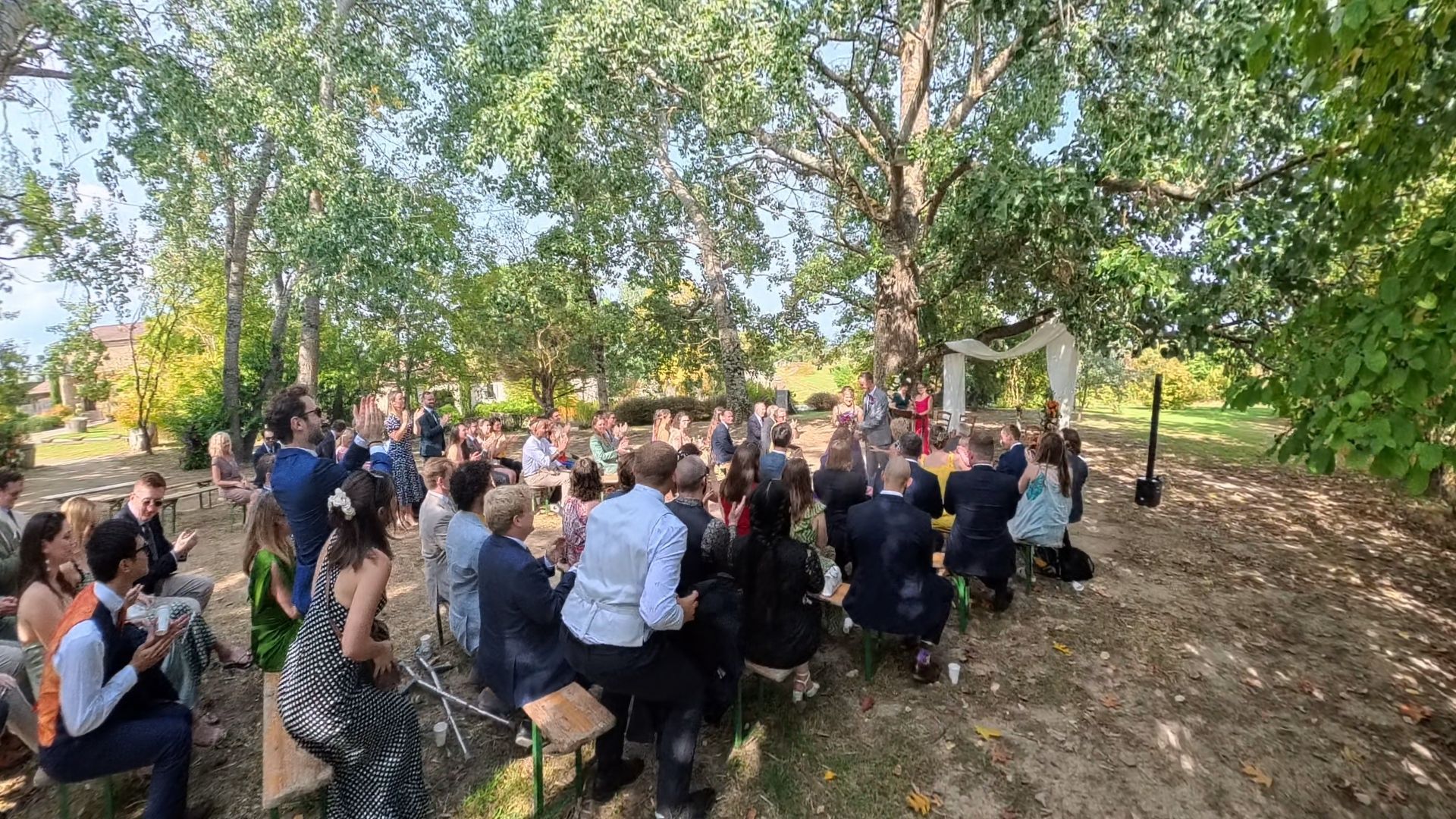
Wind is the enemy of an open-air ceremony: it blows into the microphones and scatters the sound. I bring windshields, but if the weather really turns, you need a covered fallback — talk to your venue about it when you book, not the day before.
Your music, in the exact order of the ceremony
I collect your tracks in order of arrival and sequence. It is the whole difference between a smooth ceremony and one that stumbles.
A few weeks before the big day, we build the list together. Not a jumbled playlist: a sequence. Each piece of music is tied to a precise moment and to the person entering at that moment.
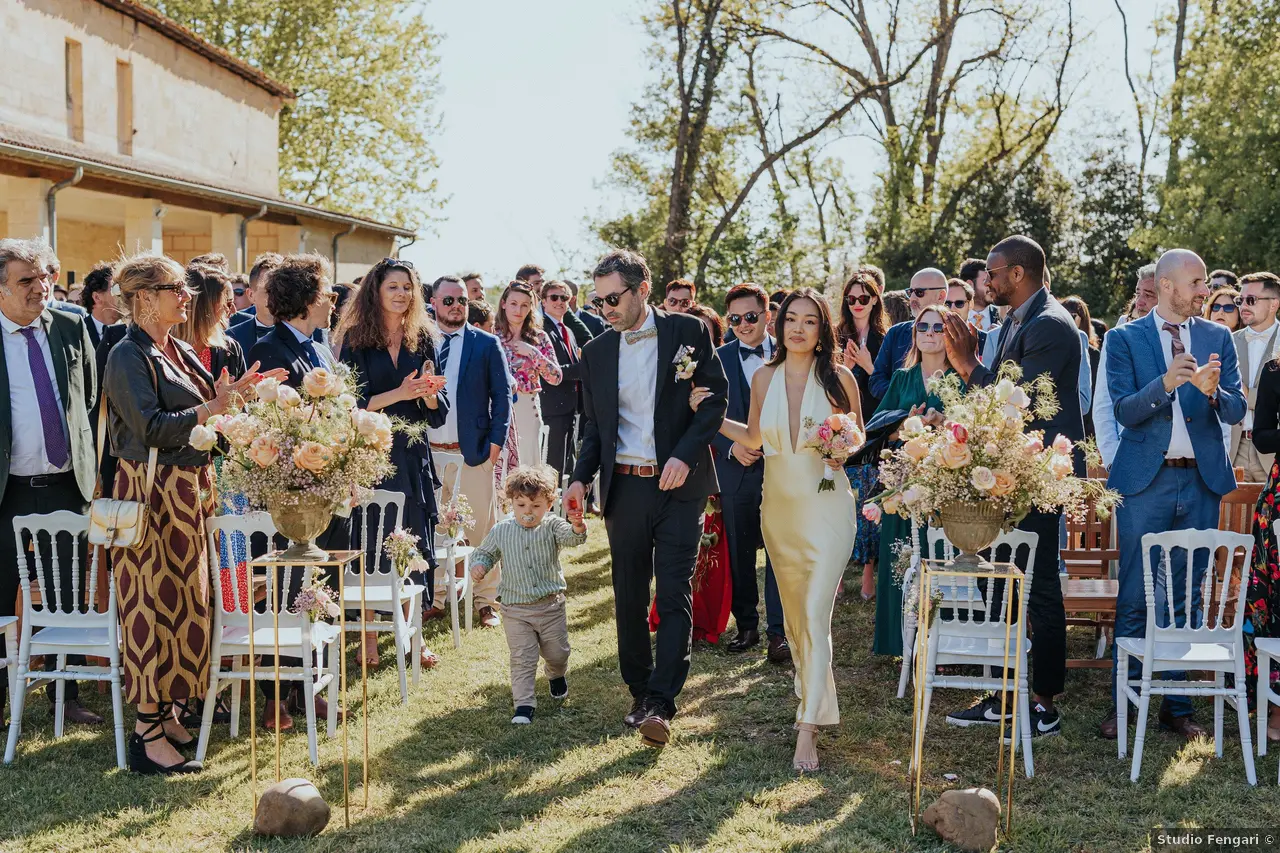
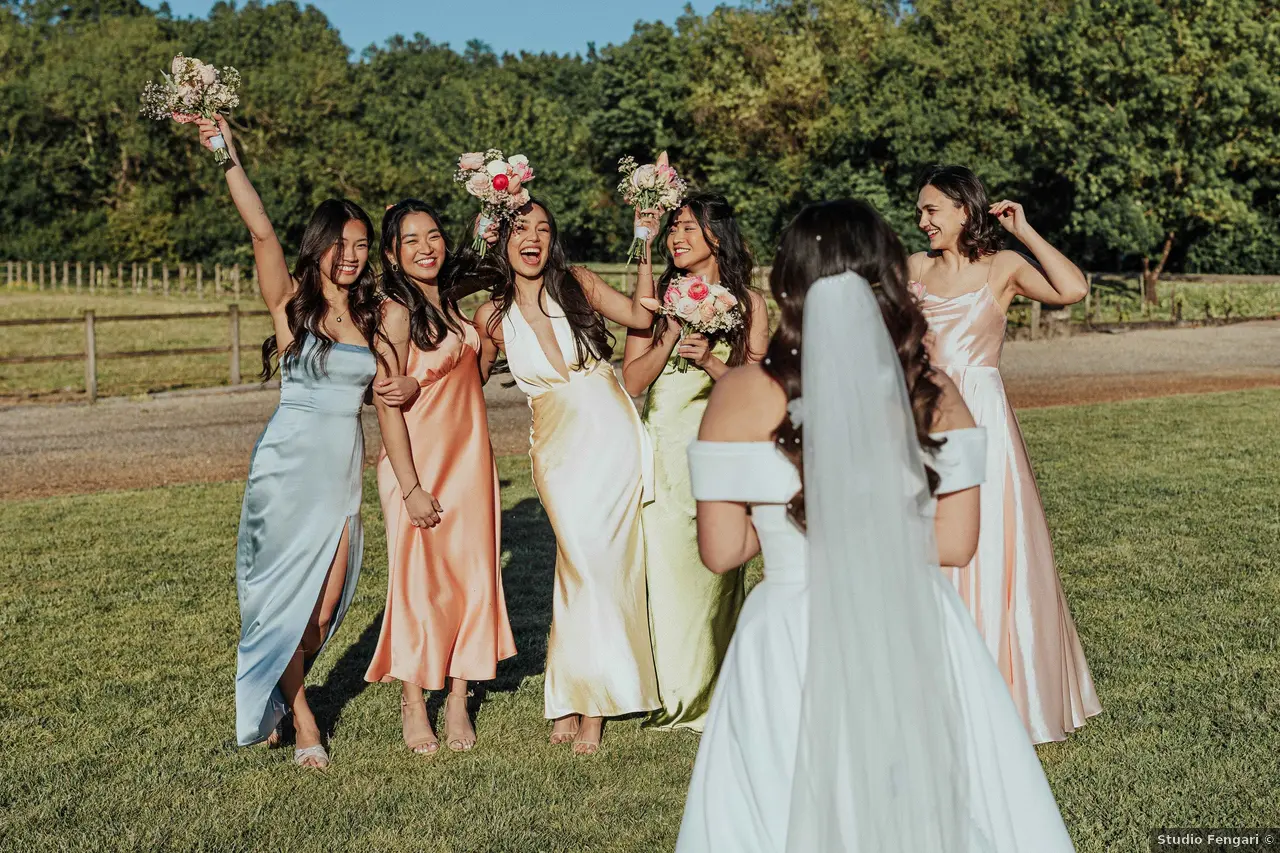
- Guests taking their seatsLight background music while everyone sits down. It fills the silence and avoids the waiting-room effect.
- The arrival of the processionThe bridesmaids, the children, the parents. One piece of music per group if you wish, or a single one that keeps playing.
- The entrance of the first partnerThe track that really launches the ceremony. Often the most debated of the two.
- The entrance of the second partnerThe moment the whole room turns around. I time the start of the track to your step, not to a stopwatch.
- The speechesSpeeches, readings, testimonies. Soft background music or total silence, whichever you prefer.
- The ritual(s)Sand, candles, ribbons, time capsule. Each ritual has its music, and it lasts as long as it needs to.
- The exchange of vows and ringsGenerally without music — then a track that swells at the moment of the kiss.
- The exitThe most joyful track on the list. It is the one that triggers the applause and launches the cocktail hour.
You send me all of this through your private LexPlay space, opened for every wedding: you add tracks as ideas come to you (or import a Spotify, Apple Music or Deezer playlist), you change your mind as often as you need, and I keep the running version up to date. See how we build a playlist together.
A piece of advice that avoids many regrets
Choose tracks whose intro is recognisable from the first seconds. An entrance to thirty seconds of synth pad is thirty seconds during which nobody knows something is happening. If you have your heart set on a track with a long intro, I prepare it beforehand to start at the right spot.
Background music that carries the emotion without covering it
Soft, cinematic, romantic. Present enough to dress a silence, discreet enough that only the voice is heard.
It is a setting I take particular care over. While a witness reads their text, I let a very low instrumental pad run — the kind of film music you do not consciously notice but that brings tears to your eyes.
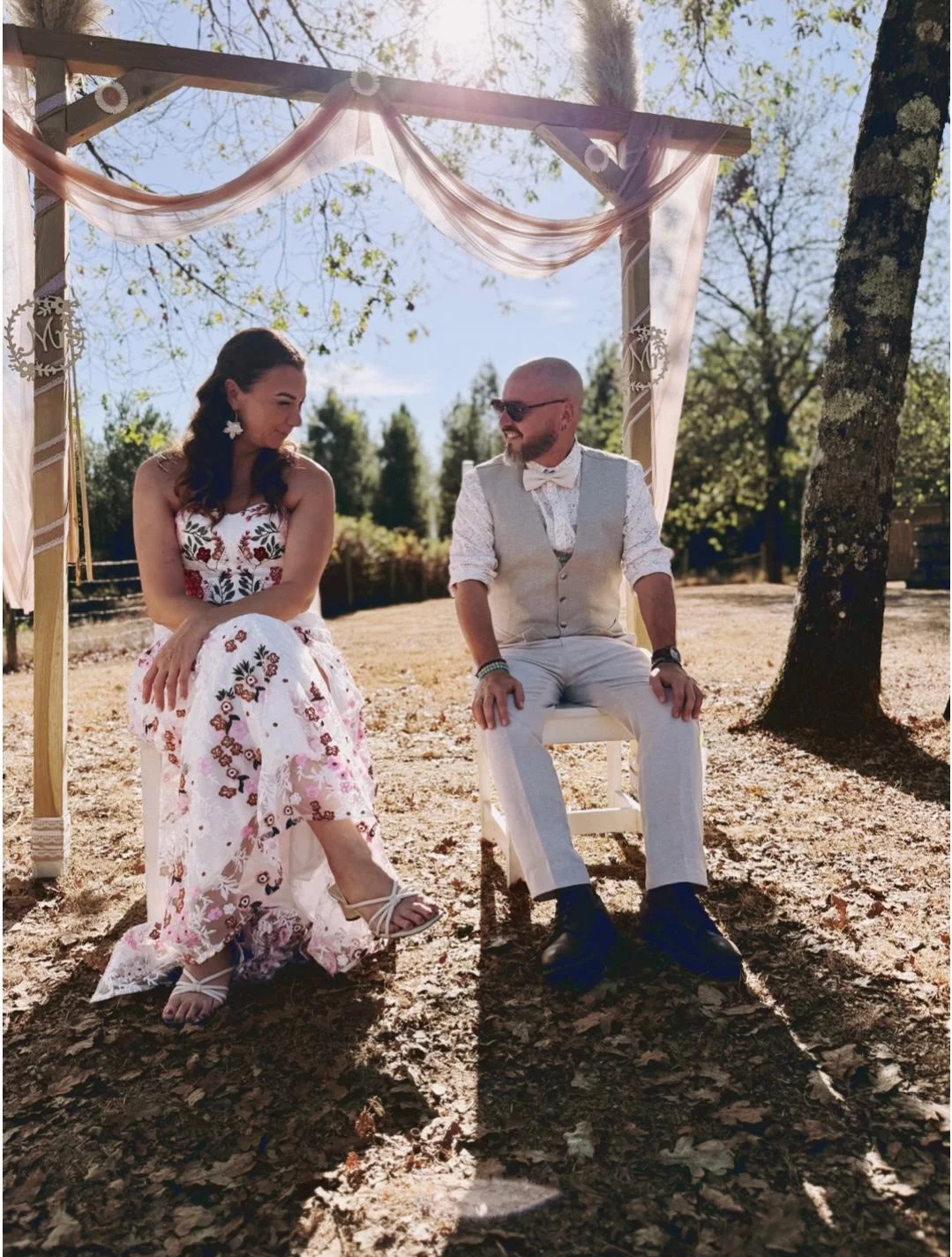
It solves three problems at once. It fills the hesitations when someone is too moved to continue. It masks stray noises, children, cars in the distance. And it gives depth to a moment that, without music, can feel very bare.
The level is worked live: I lower it when the voice weakens, raise it slightly in the silences, cut it if the speaker prefers to finish with nothing. Nobody should have to raise their voice to be heard over the music.
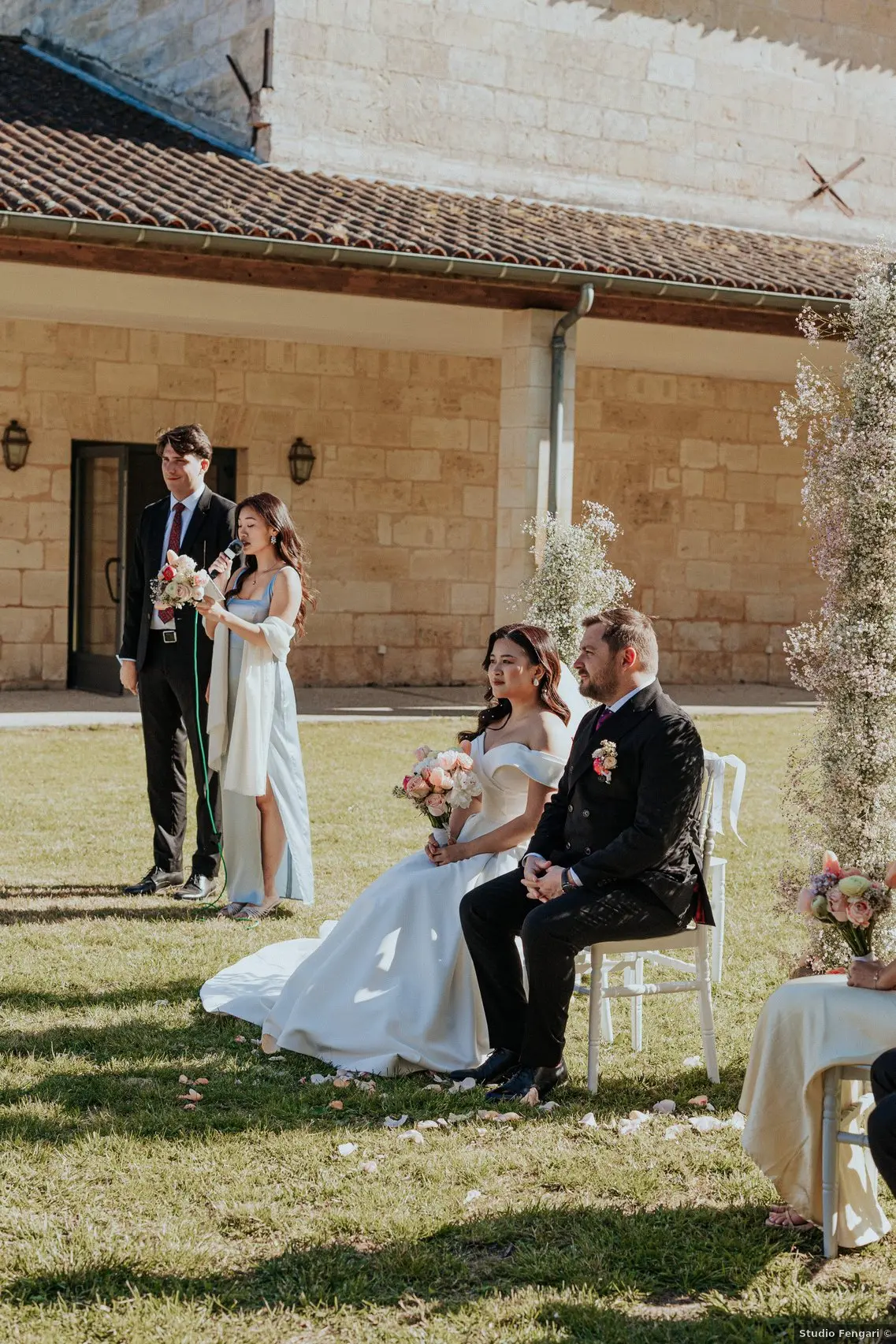
Not keen on the idea? Some couples want complete silence during the speeches, so that every word carries weight. It is a perfectly defensible choice and we discuss it beforehand. I suggest, you decide — at a ceremony, nothing happens by default.
How it works in practice
What I do before the first guest sits down.
- I arrive well in advanceThe ceremony set-up is done before the guests arrive, never while they are taking their seats. I also locate the power supply, which is rarely where you imagine outdoors.
- I do the sound checkMicrophone test, level adjustment, checking the reach to the last row. Five minutes that prevent three quarters of incidents.
- I meet the celebrantTogether we settle the running order and the cues: when they signal to me, how they introduce each speaker. Afterwards, a glance is enough.
- I stay at the desk throughout the ceremonyI launch each track at the moment it must start, adjust the volumes, cut if needed. I do not leave the console.
- I move straight into the cocktail hourThe last track of the exit slides directly into the cocktail mood. No break, no awkward silence while the guests get up.
Ceremony and party in the same place?
All the better, but it is not compulsory. If your ceremony takes place at a different venue from the reception, I plan a second set-up and the travel time. Tell me at the quote stage, not afterwards. To fit the ceremony into the rest of the day, see the hour-by-hour running order of a wedding evening.
What I am asked most often
Does sound for the ceremony cost extra?
No. When I DJ your wedding, the non-religious ceremony is included in the package. The only case where I add something to the quote is if the ceremony takes place at a different venue from the reception, because that means a second set-up.
How many speakers do we need for our ceremony?
It depends on the number of guests and how they are arranged. Below fifty people grouped together, one column speaker is more than enough. Beyond that, or if the gathering spreads out widthways, I install two or three. We talk about it once you know your seating plan.
Can we have a live musician during the ceremony?
Of course, and I amplify the musician along with the rest. Violin, guitar and voice, saxophone: I plan the necessary inputs and together we settle what is played live and what is recorded music. Alternating works very well.
What if a guest wants to do a musical surprise?
Let me know, even if you want it to stay a surprise for you. I need to know something is going to happen to prepare the microphone and cut the background music at the right moment. A surprise that fails technically is a surprise lost.
How long does a non-religious ceremony last?
Between thirty and forty-five minutes on average. Beyond an hour, the guests’ attention drops noticeably — especially in full sun. It is a good benchmark when you build your running order with your celebrant.
Where do you travel to?
Bordeaux and the whole Gironde, and well beyond for multi-day weddings. Estates, châteaux, private gardens, beaches on the Bay: I have provided ceremony sound in just about every configuration.
Let’s talk about your ceremony
Tell me your date, your venue and the number of guests. I reply within 24 hours with a clear quote, ceremony included.